Research-Driven.
A complex and ever-changing investment landscape provides challenge and purpose for our team.
Manufactured Alpha: How Manager Skill Becomes a Source of Return
November, 2026
At our recent investor conference, we explored manufactured alpha: returns earned through an investment manager's skill and capabilities, beyond what can be explained by market exposure and the risks taken. We look for an identifiable process behind those returns and evidence that the manager can apply it repeatedly. That matters both for the returns we seek and for the diversification we want our portfolios to provide.
Much of a standard portfolio's return comes from beta, meaning exposure to the broad movements of markets. There is good reason to own beta. Participating in the growth of businesses and economies is an important part of long-term investing. But owning different types of investments may do less to diversify a portfolio than investors expect if those investments depend on many of the same things going right.
Artificial intelligence (“AI”) provides a useful example. An investor may have exposure to large technology companies through a U.S. equity allocation, semiconductor suppliers through international equities, and the financing of data centers through corporate bonds or private credit. These investments have different claims on cash flows and different risks. Even so, their prospects can be linked to the same companies’ spending plans, expectations for AI demand, and financing relationships. The portfolio’s dependence on the AI buildout may therefore be greater than its technology allocation alone would suggest.
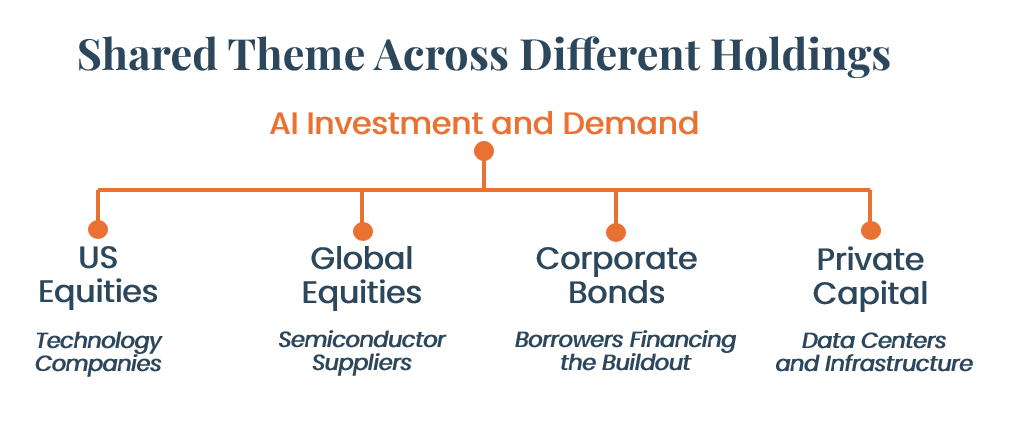
We do not need to predict the outcome of the AI buildout to recognize the value of other sources of return. The point is not to avoid AI, but to complement that exposure with investments whose success depends on something different. Manufactured alpha can play a role, potentially adding to returns while making a portfolio less dependent on broad market movements.
The Work Behind the Return
The word manufactured puts the emphasis on what a manager actually does. A research team may understand a business more accurately than the market does. An activist may help bring about a change that unlocks value. A trading organization may be able to price and execute a complex transaction that few others can undertake. Each offers a possible explanation for a return beyond simply being invested when prices rise.
An opportunity may appear suddenly, but the ability to act usually takes much longer to develop. Specialist knowledge accumulates over years, and systems are tested and refined over time. Along the way, people learn to work together and counterparties learn whom they can rely on. A single investment can draw on capabilities built over decades. While the execution is visible, much of the preparation is not. To evaluate those capabilities, we focus on process, rigor, and edge.
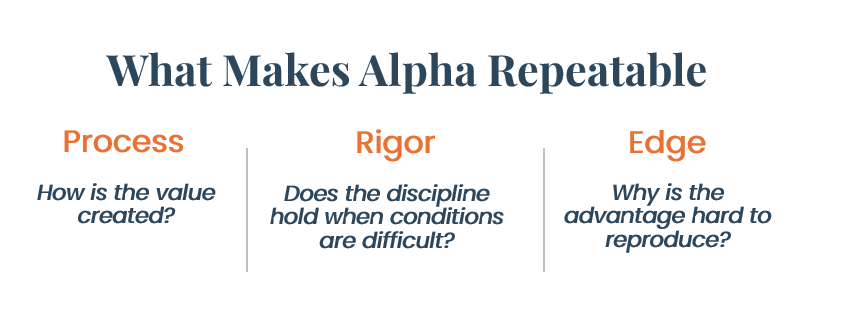
Process starts with understanding where an opportunity comes from and how the manager expects to capture it. We want to trace a result back to the investment work that produced it. A strong return alone cannot tell us whether we are seeing skill, a favorable market or an unusually successful individual investment. A repeatable approach gives us something more substantial to evaluate.
Rigor becomes especially important when conditions turn difficult. Does the manager continue to apply the same standards to research, valuation and risk management? Can the team adapt to a changed opportunity without abandoning the discipline that made the strategy attractive? We learn a great deal from how managers behave when their investments are under pressure.
The investment team asks why a manager has an advantage and whether it can endure over time. Expertise, relationships, execution capability and an ability to influence a business can all matter. We seek to understand what is difficult to reproduce and what could erode the edge. None of this removes investment risk or promises a positive result every quarter, but it helps us judge whether there is a credible basis for future returns.
Turning Potential into Portfolios
Finding a capable manager is an important beginning. The next challenge is to determine whether and how that manager fits in the portfolio. Here, Gerber Taylor's work connects to the work of our managers. Since our founding in 1990, we have built relationships and experience across public and private markets that help us find opportunities, understand them and gain access. Existing relationships can introduce us to unfamiliar strategies and opportunities we might otherwise never encounter. Over time, these conversations give us a fuller understanding of the people behind an investment and how they approach their work.
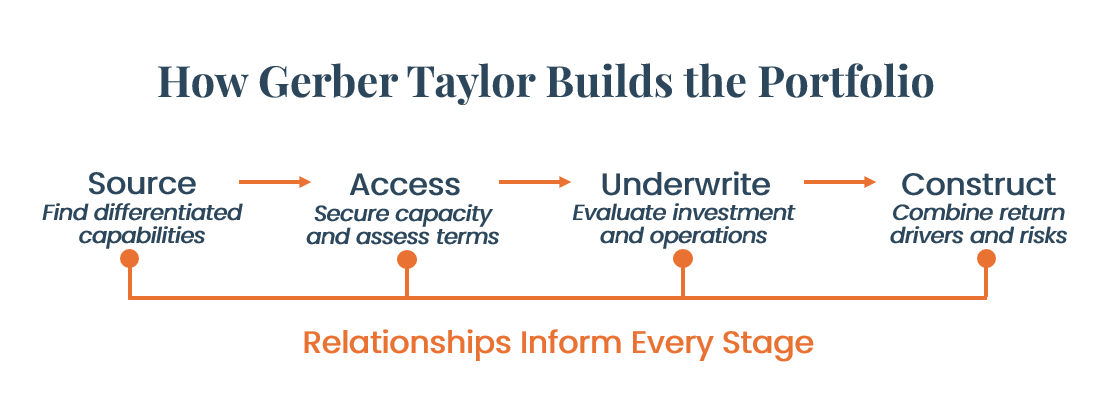
Access matters because attractive strategies can have limited capacity. Being a known, long-term partner can help us secure an allocation and have a productive discussion about terms. Those terms matter to the investor's eventual result. The structure of an investment, including fees and liquidity, deserves attention alongside the investment thesis.
Our underwriting examines both the investment approach and the organization carrying it out. We want to understand how a manager makes decisions and responds when an investment does not develop as expected. Operational due diligence asks whether the business and its controls can support the strategy. Familiarity can improve the questions we ask, but it cannot substitute for that work.
Portfolio construction then asks what a manager adds to everything we already own. Two managers pursuing different strategies may have similar exposures. Others operating in the same market may make money in very different ways. We consider those underlying drivers, along with position size and liquidity, when deciding how to combine them. The goal is a portfolio whose results draw on a range of capabilities, with risks we understand and can bear through difficult periods.
The process continues after we invest. We continue to assess whether the manager’s advantage remains intact and whether the investment still serves its intended role in the portfolio. Relationships deepen our understanding, which monitoring then turns into better decisions and, in time, the next opportunity.
Alpha in Practice[1]
Our four manager panels at our investor conference brought that work into focus across public and private markets. Citadel, Irenic, Primary Venture Partners and Redwood operate in different markets and pursue different opportunities. They give us four ways to examine the same question: what does a manager do that can create value for investors?
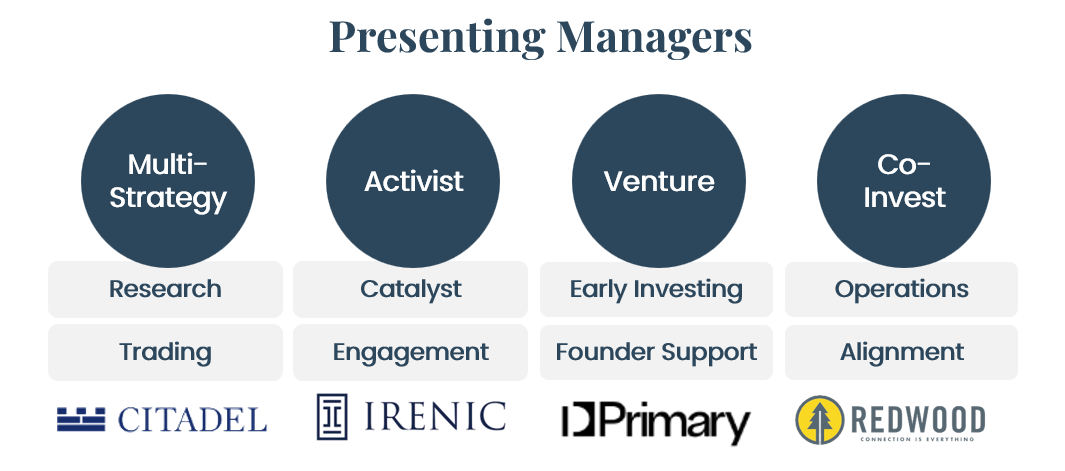
The capabilities differ, as do the risks and time required to put them to work. Some opportunities depend on acting quickly. Others require patience while a business develops or a change takes effect. That variety is useful to us, provided we understand what drives the result and how each investment fits with the others.
The following conference reflections, written by our colleagues who participated in the panels, explore those capabilities through specific examples. They offer a closer view of the investment work behind manufactured alpha and the managers carrying it out.
We are grateful to the managers who shared their time and perspectives, and to the investors who joined us on September 29. For those who could not attend, we hope these reflections convey the substance of the discussions. In addition, for those who wish to listen to the sessions in full, we will have video recordings of each available soon.
Tara Elliott & Rich Johns
Ken Griffin in conversation with Alex Moore and Mike Douglass
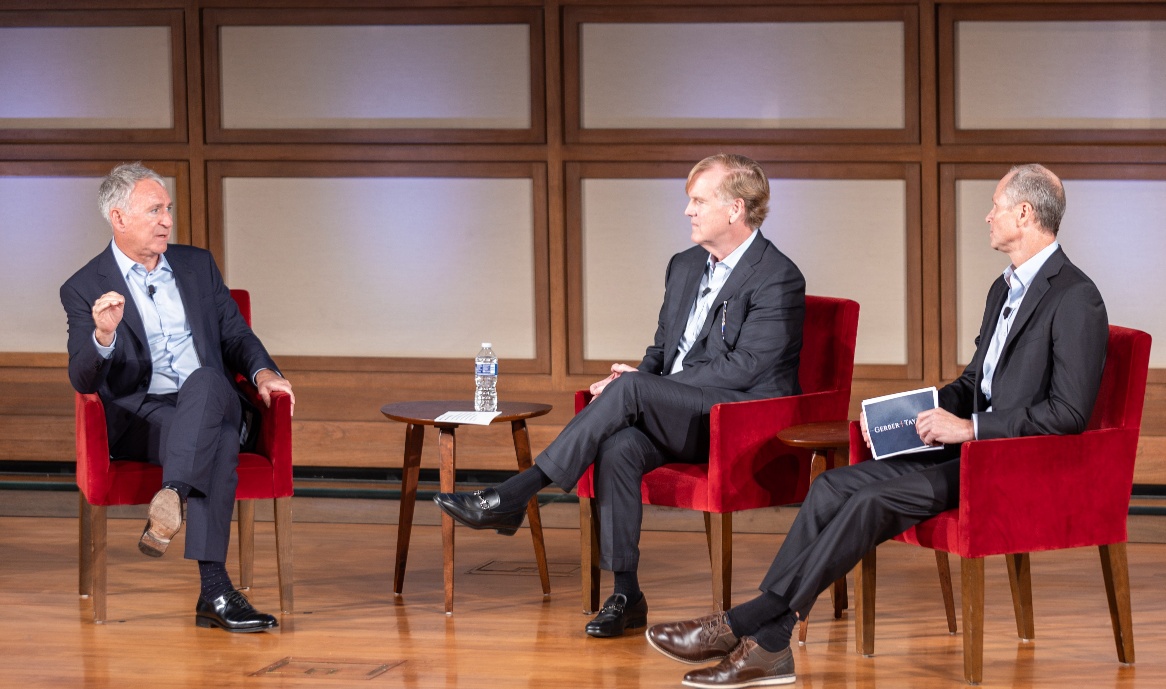
We were pleased to once again welcome Ken Griffin, founder and CEO of Citadel, to the Gerber Taylor investment conference. Our two firms have been close partners for more than 35 years. The discussion ranged from interest rates and educational policy to geopolitical hotspots.
A highlight was Ken's account of Citadel's role in helping stabilize markets unsettled by the unwind of Situational Awareness. He described how Citadel's ability to structure the trade, together with confidence that it could execute, helped bring a measure of calm to the markets. The story captured the idea of manufactured alpha, which is the ability to act on an opportunity because of capabilities built over decades. That preparation reflects the standards of excellence Ken has instilled throughout the organization.
Irenic
Adam Katz in conversation with Tanner Baker and Rich Johns
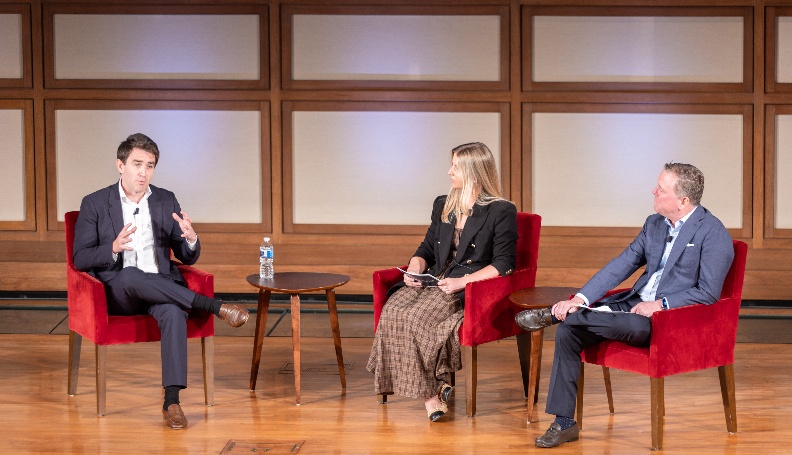
Our conversation with Irenic co-founder Adam Katz explored how constructive engagement can turn investment insight into action. Irenic seeks out undervalued businesses where working with management and the board can help realize that value. Earning their trust is an important part of the investment work, giving Irenic the opportunity to help shape decisions rather than simply anticipate them.
Barnes Group, an aerospace and industrial manufacturer, illustrates the point. Adam joined the board, and Irenic brought in a former Spirit AeroSystems CEO as a special adviser. Working alongside the other directors, Irenic helped advance a sale process that culminated in Apollo’s acquisition of Barnes. Barnes leaders later became references for Irenic, strengthening its credibility with other companies. This is the flywheel— successful engagements build trust, and trust opens doors for new opportunities. Barnes showed how manufactured alpha can compound through both investment returns and the reputation and relationships that make the next engagement possible.
Primary Venture Partners
Brian Schechter in conversation with Sean Montesi
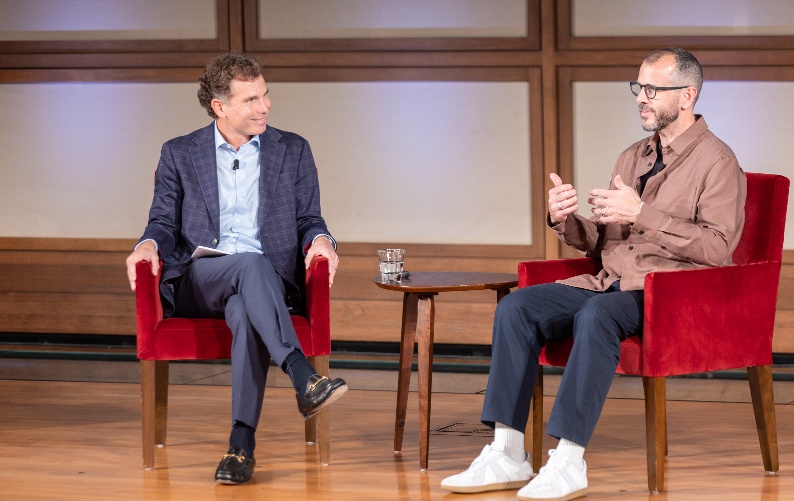
Success in venture capital often begins with differentiated insight and the conviction to back an exceptional founding team before its potential is widely recognized. Sean Montesi's conversation with Primary Partner Brian Schechter covered Primary's evolution, the venture capital investing landscape, and artificial intelligence, with Etched offering a compelling example of manufactured alpha.
Primary's experience across multiple venture cycles, combined with a well-resourced and deeply connected team, laid the groundwork for identifying the opportunity. Investing early and continuing to back a three-person team of Harvard dropouts in their early twenties required conviction. Challenging a large, rapidly expanding chip industry dominated by established players required unusual audacity and tenacity from the founders. Together, these strengths have helped Etched reach a $21 billion valuation, generating substantial investment gains for Primary's investors.
Redwood Services
Richard Lewis and Adam Hanover with Kojo McLennon
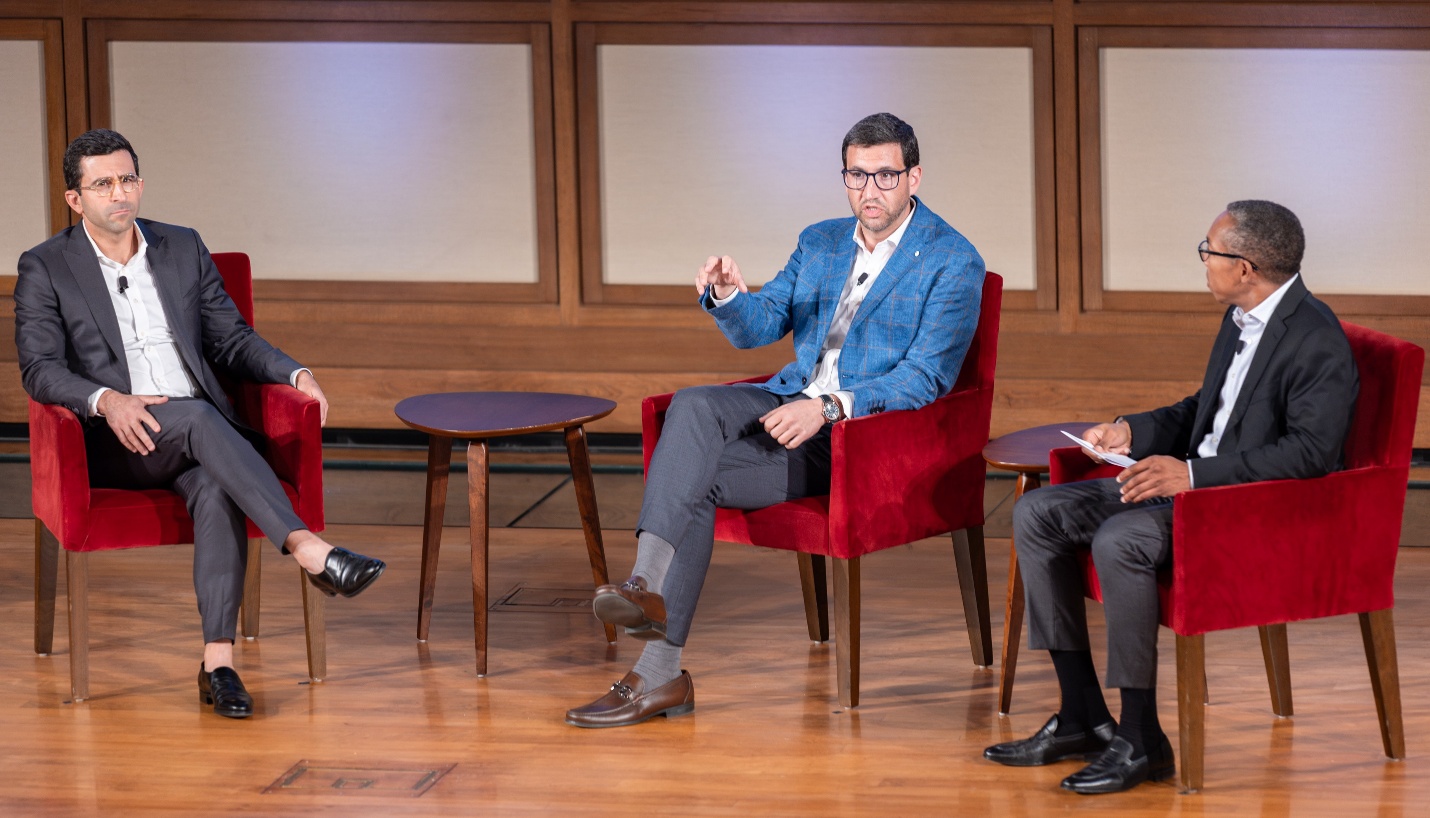
In 2020, Gerber Taylor and its clients made an initial investment to help build Redwood Services, a platform acquiring and growing residential HVAC, plumbing, and electrical businesses. An opportunistic recapitalization in early 2025 allowed for a full exit, generating a very favorable investment outcome.
Richard Lewis and Adam Hanover of Redwood Services joined Kojo McLennon onstage to explore how that alpha was manufactured. Their approach centered on building a best-in-class business with the flexibility to operate beyond traditional private equity practices and holding periods. Meaningful ownership retained by founders of acquired businesses, local operating autonomy, and centralized resources supported both organic growth and expansion through acquisitions. For us, the outcome reflects the best traits of private equity from a value creation standpoint, ones that we continually seek to replicate, whether through fund commitments or co-investments.
Disclosures
Information contained in this material is based on the views and opinions of Gerber Taylor as of the date this material was made available. This material does not constitute investment advice, a recommendation, an offer to sell, or a solicitation of an offer to buy any security or financial product. It is provided for informational purposes only and should not be relied upon as the sole basis for any investment decision. Readers should consult with the professional adviser of their choosing regarding the applicability of any specific issue discussed herein to their individual circumstances.
Information contained herein is believed to be reliable as of the date indicated, but we do not represent that it is complete. Opinions expressed herein are subject to change without notice. Certain information contained herein, including forward-looking statements and economic and market information, has been obtained from published sources and/or prepared by third parties and, in certain cases, has not been updated through the date hereof. While such sources are believed to be reliable, we do not assume responsibility for the accuracy or completeness of such information. We do not undertake any obligation to update the information contained herein as of any future date.
Statements in this material, including statements in the present tense, may contain projections or forward-looking statements regarding future events, targets, intentions, or expectations. Due to various risks and uncertainties, actual events or results may differ materially from those reflected or contemplated in such forward-looking statements. Past performance is no guarantee of future results. Investments are subject to risk, including the possible loss of principal. There is no guarantee that projected returns or risk assumptions will be realized or that any investment strategy will be successful. Different types of investments involve varying degrees of risk, and there can be no assurance that the future performance of any specific investment, investment strategy, or product referenced directly or indirectly in this material will be profitable, equal any corresponding indicated performance level, or be suitable for any particular portfolio.
These examples reflect the managers who participated in our investor conference and are intended to illustrate different approaches to creating value. They are not representative of all GT investments, and investment outcomes may vary. ↑